



Modelos europeos de telemedicina, como el servicio finlandés Medilux, permiten realizar consultas médicas online mediante un cuestionario clínico, sin acudir a una consulta presencial.

Reinterventions in TAVR with Self-Expanding Valves

TAVR treatment of severe aortic stenosis is becoming more and more common, showing comparable evolution, or even superior in some studies when using the femoral approach, vs. surgical aortic valve replacement (SAVR).
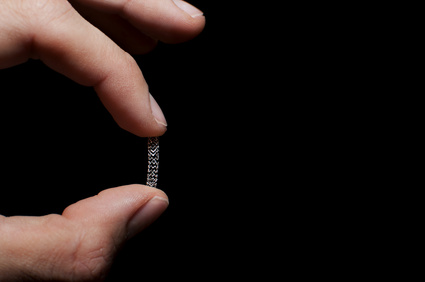
stent

One of the current challenges is TAVR durability vs. SAVR. Even though 9 or 10 years has been deemed acceptable by current standards, we should not overlook the fact that there is a group of patients that will require reintervention, a scenario that we have not yet looked at in depth, let alone compared against surgery, which most likely will eventually be addressed. 

This was a retrospective analysis of the CoreValve US Pivotal Extreme-Risk, High-Risk and SURTAVI trials, including 7,757 patients: 5,925 undergoing TAVR (4,478 CoreValve and 1,447 Evolute R/PRO) and 1,832 SVAR.

99 of these patients (1.3%) required reintervention; 80 were treated with TAVR (69 CoreValve and 11 Evolut R/PRO).

Read also: 12-Month Evolution of Edge-to-Edge Repair with PASCAL.

At 5 year followup, 99 patients (1.3%) needed reinterventions, most frequently TAVR patients (2.2% vs. 1.5%; P=0.017) vs SVAR. Reinterventions were more common during the first year (<1 year; adjusted subdistribution HR: 3.50; CI 95%: 1.53-8.02), but there were no differences between years 1 and 5 (adjusted subdistribution HR: 1.05; CI 95%: 0.48-2.28). The main cause behind reintervention in TAVR patients were regurgitations and in SAVR patients, endocarditis. 

At 5 years, Evolut R/PRO presented a lower reintervention rate vs. CoreValve (0.9% vs. 1.6%; P=0.006), but there were no differences with SVAR (0.9% vs. 1.5%; P=0.41).

Conclusion

There was a lower reintervention rate for CoreValve/Evolut R/PRO and SVAR. Reinterventions were more frequent within the first year in TAVR patients and after the first year in SAVR patients. There were more reinterventions with first generation TAVR, CoreValve, and they were solved percutaneously. Reinterventions were more frequent with CoreValve than Evolut or SVAR.

Dr. Carlos Fava - Consejo Editorial SOLACI

Dr. Carlos Fava.
Member of the Editorial Board of SOLACI.org.

Original Title: Reinterventions After CoreValve/Evolut Transcatheter or Surgical Aortic Valve Replacement for Treatment of Severe Aortic Stenosis. 

Reference: Kendra J. Grubb, et al. J Am Coll Cardiol Intv 2024;17:1007–1016.


Subscribe to our weekly newsletter

Get the latest scientific articles on interventional cardiology

More articles by this author

SCAI 2026 | Can an atrial fixation device prevent complications of transcatheter mitral valve replacement? Analysis of the AltaValve system

Transcatheter mitral valve replacement (TMVR) represents one of the most complex areas within structural interventions. Unlike TAVI, where valvular anatomy typically provides more predictable...

Beyond TAVI: Cardiac Rehabilitation as a Determinant of Clinical Outcomes

Aortic stenosis is an increasingly prevalent condition associated with population aging, with a prevalence of approximately 3.4% in individuals over 75 years of age...

Comparative outcomes between transaxillary approach and thoracotomy-based approaches in TAVI with alternative access

TAVI has become the standard treatment for high-risk aortic stenosis. When transfemoral access is not feasible (approximately 10–15%), alternative approaches are used: transaxillary (subclavian...

Management of Valve Thrombosis in TAVI: Current Evidence-Based Approach

The expansion of transcatheter aortic valve implantation (TAVI) into younger and lower-risk populations has brought bioprosthetic valve thrombosis to the forefront as a clinically...

LEAVE A REPLY

Please enter your comment!
Please enter your name here

Related Articles

SOLACI Sessionsspot_img

Recent Articles

SCAI 2026 | Deep vein arterialization as an alternative in patients with critical limb ischemia without conventional options

Critical limb ischemia (CLI) represents one of the most advanced stages of peripheral arterial disease (PAD). In a significant proportion of patients, distal anatomy,...

SCAI 2026 | Can an atrial fixation device prevent complications of transcatheter mitral valve replacement? Analysis of the AltaValve system

Transcatheter mitral valve replacement (TMVR) represents one of the most complex areas within structural interventions. Unlike TAVI, where valvular anatomy typically provides more predictable...

SCAI 2026 | SELUTION DeNovo subanalysis: Use of sirolimus-eluting balloon in acute coronary syndrome

Percutaneous coronary intervention (PCI) with drug-eluting stent (DES) implantation remains the predominant strategy in the setting of acute coronary syndrome (ACS). However, in recent...

