



See All ProEducar “José Gabay” Course (Eighth Edition) Presentations

We are deeply thankful to all interventional physicians who, motivated by their great scientific and educational vocation, presented their works at the “José Gabay” Course and actively collaborated in training and providing updated concepts for the next generations of interventional cardiologists.
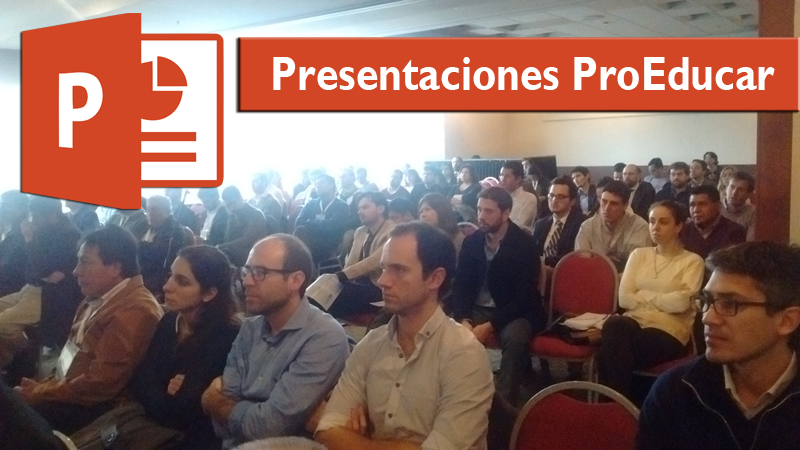
presentaciones ProEducar

Read and/or download the presentations below:


Module I: Fundamentals and Basic Elements.

  • Álvarez, José. “Transfemoral and Transradial Access. Step by Step. Complications”.

  (Spanish version)

  • Vignolo, Gustavo. “Pre/Post-Stent Antiplatelet Therapy. Drugs, Doses, and Time. “.

  (Spanish version) 


Module II: Complex Coronary Interventions. Tips and Secrets of the Trade.

  • Lluberas, Ricardo. “Primary Angioplasty: How Do We Obtain the Best Flow? Techniques and Step by Step Demonstrations”.

  (Spanish version).

  • Berrocal, Daniel. “Treatment of Bifurcation Lesions. When and How Do We Use ONE or TWO Stents? Educational Case”.

  (Spanish version).


Module III: Diagnostic Tools in the Cath Lab.

  • Costa, Ribamar. “Integration of Diagnostic Methods in the Cath Lab”.

  (Spanish version).

  • Telayna, Juan. “When and How Should We Use IVUS? Step by step”.

  (Spanish version).


Module IV: Peripheral Interventions.

  • Mandil, Ari. “Carotid Artery Stenting. Treatment Techniques. Step by Step.”

  (Spanish version).

  • Londero, Hugo. “Exclusion of an Abdominal Aortic Aneurysm. Lessons for Proper Technique”.

 (Spanish version).

  • Valdivieso, León. “Suprapatellar Lesions. Treatment Indications. Stents, Drug-Eluting Balloons, Surgery…”.

 (Spanish version).


Module V: Structural Heart Disease

  • Damonte, Anibal. “Appendage Closure. Treatment Technique. Step by Step”.

 (Spanish version).

  • Méndiz Oscar. “Aortic Valve Implantation. Current Valve Types. Patient Selection.”

 (Spanish version).

  • Ribeiro, Henrique. “Mitral Valve Intervention. Current Data and Future Expectations”

 (Spanish version).


Subscribe to our weekly newsletter

Get the latest scientific articles on interventional cardiology

We are interested in your opinion. Please, leave your comments, thoughts, questions, etc., below. They will be most welcome.


More articles by this author

Advanced Postgraduate Course in Hemodynamics and Interventional Cardiology – 2026 Edition

Registration is now open for the SOLACI–CACI Advanced Postgraduate Course in Hemodynamics and Interventional Cardiology – 2026 Edition. The program is intended for physicians with...

SOLACI Wishes You Happy Holidays

From the heart, Happy Holidays! The Latin American Society of Interventional Cardiology wishes all its members and the medical community across the continent a very Merry Christmas...

Condolences on the passing of Cristiam Arancibia

The Latin American Society of Interventional Cardiology deeply mourns the passing of Lic. Cristiam Arancibia, first Director of the Chapter of Technicians and Nurses,...

Watch Again: Pulmonary Embolism in 2025 — Risk Stratification and Novel Therapeutic Approaches

Our webinar “Pulmonary Embolism in 2025: Risk Stratification and Novel Therapeutic Approaches” is now available to watch. The session took place on November 25,...

LEAVE A REPLY

Please enter your comment!
Please enter your name here

Related Articles

SOLACI Sessionsspot_img

Recent Articles

VECTOR: First Percutaneous Aorto-Coronary Bypass Case, a New Conceptual Approach

Coronary obstruction represents one of the most severe complications associated with transcatheter aortic valve implantation, particularly in valve-in-valve scenarios involving surgical bioprostheses, narrow aortic...

Comparison of strategies: NMA of IVUS, OCT, or angiography in complex lesions

Percutaneous coronary intervention (PCI) in complex lesions continues to represent a technical challenge in contemporary interventional cardiology. Angiography, although it remains the most widely...

Is upper-limb aerobic training an effective alternative to lower-limb exercise in peripheral artery disease?

Peripheral artery disease is associated with impaired functional capacity, reduced walking distance, and poorer quality of life, and structured exercise is a class I...
