






While the consumption of carbonated soft drinks has decreased in most Western countries over the last 20 years, these are still the main source of simple sugars in our diet. The World Health Organization recommends 25-50 g of simple sugars per day, a dose covered with a single can of a carbonated soft drink. For other associations, the ideal diet includes less than 450 kcal/week in sugar-sweetened beverages.
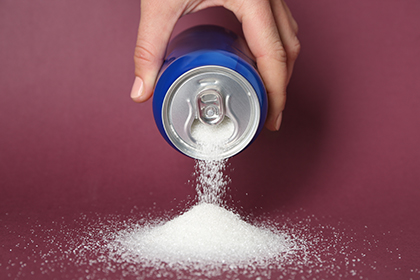
The noxious effects of the regular consumption of sugar-sweetened beverages, such as weight gain, metabolic syndrome, and type 2 diabetes, have been shown through multiple observational studies. Moreover, a high consumption of sugar-sweetened beverages has been repeatedly associated with hypertension, coronary disease, stroke, and dyslipidemia.
An excessive sugar intake has become the main risk factor for cardiometabolic mortality in young and middle-aged adults.
Artificially sweetened beverages are often advertised as a healthier alternative to sugar-sweetened beverages, and their consumption is on the rise, particularly among children.
Some associations, including the American Heart Association (AHA), have advised caution in the use of artificially sweetened beverages as a replacement for sugar-sweetened beverages in the fight against obesity, metabolic syndrome, and diabetes, given the current uncertainties surrounding their benefit and even their safety.
Read also: Mechanisms of Infarction in Coronary Arteries with Non-Significant Lesions.
Some observational studies have reported a positive association between diet drinks and the risk of stroke, dementia, myocardial infarction, and cardiovascular death. These results might be incredibly biased, seeing how higher-risk patients consume more diet drinks.
In this work, recently published in Circulation, researchers followed 37,716 men between 1986 and 2014, plus 80,647 women between 1980 and 2014. All of these subjects were free from chronic diseases at baseline.
After adjusting for multiple factors, sugar-sweetened beverages were associated with increased global mortality in all “dose” categories (<1 per month, 1–4 per month, 2–6 per week, 1 per day and >2 per day).
Read also: What is Optimal Blood Pressure?
This association was observed for both cardiovascular mortality and cancer mortality.
Artificially sweetened beverages were associated with increased mortality only in the highest consumption category and among women. The increase in global mortality was driven by an increase in cardiovascular disease, since the aforementioned beverages were not associated with an increase in cancer mortality in any cohort.
Conclusion
The consumption of sugar-sweetened beverages was positively associated with increased global mortality, which was graded with dose. The association between a high consumption of artificially sweetened beverages and mortality among women must be confirmed through further studies.
Original Title: Long-Term Consumption of Sugar-Sweetened and Artificially Sweetened Beverages and Risk of Mortality in US Adults.
Reference: Vasanti S. Malik et al. Circulation. 2019;139:2113–2125.
Subscribe to our weekly newsletter
Get the latest scientific articles on interventional cardiology
We are interested in your opinion. Please, leave your comments, thoughts, questions, etc., below. They will be most welcome.



