



EuroPCR 2020 | CLASP: New Device for Mitral Repair with at One Year Follow Up

The CLASP looked into patients treated with the new device for transcatheter mitral repair called PASCAL and showed low complications rate, high survival rate, significant mitral regurgitation reduction and improved quality of life at one year. 
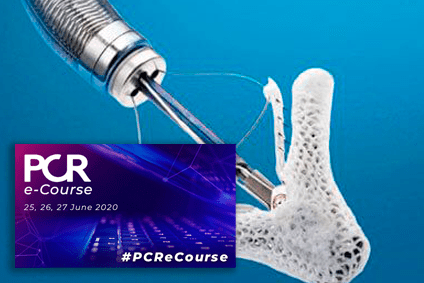
EuroPCR 2020 | EVOQUE: nuevo sistema de reemplazo mitral por catéter, promesas a corto plazo y esperanzas para el futuro

In July 2019 we published on our web page the 30 year outcomes of the PASCAL device () which appear good, but still had to prove safe and effective over time. 

The one-year follow-up was presented at the virtual EuroPCR 2020 and published simultaneously in J Am Coll Cardiol Intv (the same magazine that had published the first outcomes).

All eligible patients showed moderate to severe mitral regurgitation symptoms despite optimal medical treatment.

Final end points included procedural and clinical success and adverse events rate. 


Read also: EuroPCR 2020 | EVOQUE: New Transcatheter Mitral Valve Replacement System, Promises at Short Term and Future Hope


109 patients were treated (67% with functional mitral regurgitation (MR) and 33% MR of degenerative etiology), most in functional class III/IV.

At 30 days, there was one cardiovascular death (0.9%), mild or lower mitral regurgitation was achieved in 80% of patients (77% of functional MR and 86% of degenerative MR). Nearly 90% of patients achieved FC I/II with a 28-minute improvement in the 6 minute walk test.

At one year, survival was 92% and 88% of patients did not require new hospitalization for cardiac failure (80% of patients with functional etiology and 100% of patients in the degenerative arm). Residual MR, functional class and quality of life score resulted similar at 30 days. 

Conclusion

The PASCAL device for transcatheter mitral repair has maintained good results at 30 days in terms of improved mitral regurgitation, functional class and quality of life.

Título original: One-Year Outcomes for Transcatheter Repair in Patients with Mitral Regurgitation from the CLASP Study.

Referencia: John G. Webb et al. JACC: Cardiovascular Interventions 2020, article in press. DOI: 10.1016/j.jcin.2020.06.019 y presentado en el EuroPCR virtual 2020.


Subscribe to our weekly newsletter

Get the latest scientific articles on interventional cardiology

We are interested in your opinion. Please, leave your comments, thoughts, questions, etc., below. They will be most welcome.


More articles by this author

Management of Valve Thrombosis in TAVI: Current Evidence-Based Approach

The expansion of transcatheter aortic valve implantation (TAVI) into younger and lower-risk populations has brought bioprosthetic valve thrombosis to the forefront as a clinically...

Experience with the intra-annular self-expanding Navitor valve: data from the STS/ACC TVT registry

The expansion of TAVI, with the introduction of new-generation devices, has prioritized not only periprocedural safety, but also the preservation of coronary access, more...

The Two Sides of the Coin: What Do CHAMPION-AF and CLOSURE-AF Teach Us About Left Atrial Appendage Closure?

Letter to the editor: Juan Manuel Pérez Asorey Percutaneous left atrial appendage closure (LAAO) is currently going through one of the most interesting stages of...

CLOSURE-AF: Percutaneous Left Atrial Appendage Closure versus Medical Therapy in Atrial Fibrillation

Percutaneous left atrial appendage closure has been proposed as an alternative to anticoagulation in patients with atrial fibrillation and high bleeding risk; however, comparative...

LEAVE A REPLY

Please enter your comment!
Please enter your name here

Related Articles

SOLACI Sessionsspot_img

Recent Articles

Coil embolization of segmental arteries as a spinal cord protection strategy prior to complex endovascular repair of thoracoabdominal aorta

Spinal cord ischemia remains one of the most devastating complications in the repair of thoracoabdominal aneurysms, with incidences of up to 20–30% in extensive...

Mechanical thrombectomy versus anticoagulation in intermediate-risk pulmonary embolism: systematic review and meta-analysis

Intermediate-risk pulmonary embolism (PE) has anticoagulation as the standard treatment, while reperfusion strategies remain a matter of debate. In this context, mechanical thrombectomy has...

High Ischaemic Risk Criteria in Chronic Coronary Syndrome: Prevalence and Prognosis

Despite advances in the management of chronic coronary syndrome (CCS), including the widespread use of drug-eluting stents (DES) and the optimization of medical therapy,...
