



Can Ultrasound Treat Aortic Stenosis?

Severe calcified aortic stenosis is a common condition that can currently be effectively treated with SAVR or TAVR. However, some patients, given comorbidities or anatomical characteristics, are not good candidates for these therapeutic alternatives. 
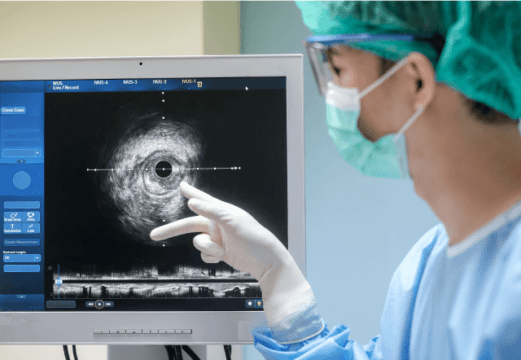
¿Es frecuente el uso de IVUS para guiar la ATC?

The non-invasive ultrasound therapy (NIUT) has surged as viable alternative. It claims ultrasound might act on calcified valves, and mobilize tissue by softening it. 

The study included 40 patients with symptomatic calcified severe aortic stenosis that were no good candidates for surgical or transcatheter aortic valve replacement. Patients were treated with ultrasound using Valvosoft from Cardiawave, based in Levallois-Perret, France.

Read also: Low Gradient, Normal Flow Aortic Stenosis: Changes in Quality of Life with TAVR.

Primary end point was procedure related mortality at 30 days. Mean age was 83, with equal distribution of men and women. 10 were diabetic, 32 hypertensive, 6 had COPD, 16 kidney function deterioration, 18 coronary artery disease and 7 prior MI.  

STS risk score was 5.6%. Cardiac assessment revealed 53% ejection fraction, aortic valve area 0.57 cm2, mean gradient 41.9 mmHg, and two patients had bicuspid valve. One procedure was done under general anesthesia, while the rest were sedated. 

No patient showed the primary end point and there were no complications at 30 days except for a transient desaturation during one procedure. 

Read also: Is AS Only Important When Severe?

After 6 months, survival rate resulted 72.5%, with no incidence of cerebrovascular events or changes in cognitive tests. Also, most patients saw improved functional class and quality of life. Eco-Doppler revealed an increase in valve area (0.58 cm2 vs. 0.64 cm2, p=0.0088) and a reduction in mean gradient (41.9 mmHg vs. 38.8 mmHg, p=0.024).

Conclusion

This novel ultrasound technique to treat severe calcified aortic stenosis has been shown feasible and effective. 

Dr. Carlos Fava - Consejo Editorial SOLACI

Dr. Carlos Fava.
Member of the Editorial Board of SOLACI.org.

Original Title: Treatment of severe symptomatic aortic valve stenosis using  non-invasive ultrasound therapy: a cohort study. 

Reference: Emmanuel Messas, et al. www.thelancet.com Published online November 13, 2023 https://doi.org/10.1016/S0140-6736(23)01518-0.


Subscribe to our weekly newsletter

Get the latest scientific articles on interventional cardiology

More articles by this author

Atrial Fibrillation After Percutaneous Patent Foramen Ovale Closure: Cohort Study with Continuous Implantable Cardiac Monitoring

Atrial fibrillation (AF) is a recognized complication following percutaneous closure of a patent foramen ovale (PFO), with reported incidences of up to 30% during...

AHA 2025 | CLOSURE-AF: Left Atrial Appendage Occlusion (LAAO) vs. Medical Therapy in Atrial Fibrillation with High Stroke and Bleeding Risk

Atrial fibrillation (AF) is a complex condition in which patients often present with multiple comorbidities, including high bleeding risk. Percutaneous left atrial appendage occlusion...

Atrial Fibrillation and Chronic Kidney Disease: Outcomes of Different Stroke Prevention Strategies

Atrial fibrillation (AF) affects approximately 1 in every 4 patients with end-stage renal disease (ESRD). This population carries a high burden of comorbidities and...

TCT 2025 | ANDES Trial: Short-Term DOAC vs. DAPT After Percutaneous Left Atrial Appendage Occlusion

Percutaneous left atrial appendage occlusion (LAAO) is an established alternative to chronic anticoagulation in patients with non-valvular atrial fibrillation (AFib). A clinically relevant complication...

LEAVE A REPLY

Please enter your comment!
Please enter your name here

Related Articles

SOLACI Sessionsspot_img

Recent Articles

Atrial Fibrillation After Percutaneous Patent Foramen Ovale Closure: Cohort Study with Continuous Implantable Cardiac Monitoring

Atrial fibrillation (AF) is a recognized complication following percutaneous closure of a patent foramen ovale (PFO), with reported incidences of up to 30% during...

Impact of Baseline Systolic Blood Pressure on Blood Pressure Changes Following Renal Denervation

Renal denervation (RDN) is a guideline-recommended therapy to reduce blood pressure in patients with uncontrolled hypertension, although uncertainties remain regarding which factors best predict...

AHA 2025 | OPTIMA-AF: 1 Month vs. 12 Months of Dual Therapy (DOAC + P2Y12) After PCI in Atrial Fibrillation

Concomitant atrial fibrillation (AF) and coronary artery disease is a common occurrence in clinical practice. In these patients, current guidelines recommend 1 month of...

