



Modelos europeos de telemedicina, como el servicio finlandés Medilux, permiten realizar consultas médicas online mediante un cuestionario clínico, sin acudir a una consulta presencial.

Boston Scientific Discontinues Lotus Valve and Makes a New Bet

Mechanically-expanding valve Lotus Edge was discontinued worldwide, as recently informed by its manufacturer, Boston Scientific.
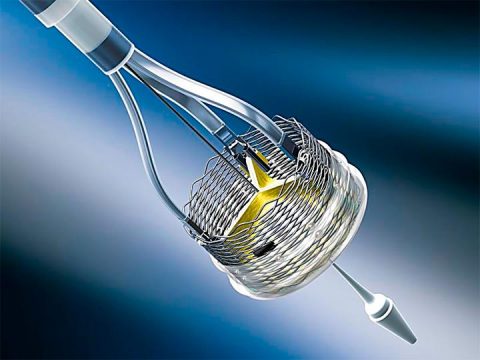
Boston Scientific discontinúa la válvula Lotus y hace una nueva apuesta

This is a voluntary recall of all Lotus valve inventory, and the immediate suspension of the program.

The United States Food and Drug Administration (FDA) approved Lotus Edge in 2019 for patients with severe aortic stenosis and high surgical risk. The valve had already received the European CE Mark in 2016.

The design of this special valve was always challenging, specifically its delivery system, which led Boston to discontinue the program. Boston’s attention will now be focused on Acurate neo.

The valve presented undeniable benefits, particularly in terms of paravalvular leak, but its release and recapture were challenging.

The Lotus device had already been recalled in 2016 for issues with the delivery system, and in 2017 for issues with the closure system.


Read also: Transcatheter Bariatric Surgery?


This last and final recall was also due to problems with the delivery system. Given the time and money needed for development and market release, Boston decided to just recall the product.

In its statement, Boston indicates that there is no safety issue for patients who currently have a Lotus valve implanted.

The company will continue its research on Acurate neo, although the SCOPE and SCOPE 2 studies that tested the first-generation Boston valve vs. Sapien 3 and CoreValve Evolut, respectively, did not reach non-inferiority.


Read also: Watch Again New Frontiers in the Cath Lab.


Now, hopes are on the Acurate neo 2, with improvements to decrease paravalvular leak.

Original Title: Boston Scientific announces Lotus Edge aortic valve system voluntary recall and product discontinuation.

Reference: Boston Scientific. Published on: November 2020.


Subscribe to our weekly newsletter

Get the latest scientific articles on interventional cardiology

More articles by this author

Percutaneous closure of paravalvular leaks in high-risk patients: clinical outcomes and the impact of residual leak

Paravalvular leak (PVL) is a relatively frequent complication following valve replacement (overall incidence 5–18%; 2–10% in the aortic position and 7–17% in the mitral...

SCAI 2026 | Can an atrial fixation device prevent complications of transcatheter mitral valve replacement? Analysis of the AltaValve system

Transcatheter mitral valve replacement (TMVR) represents one of the most complex areas within structural interventions. Unlike TAVI, where valvular anatomy typically provides more predictable...

Beyond TAVI: Cardiac Rehabilitation as a Determinant of Clinical Outcomes

Aortic stenosis is an increasingly prevalent condition associated with population aging, with a prevalence of approximately 3.4% in individuals over 75 years of age...

Comparative outcomes between transaxillary approach and thoracotomy-based approaches in TAVI with alternative access

TAVI has become the standard treatment for high-risk aortic stenosis. When transfemoral access is not feasible (approximately 10–15%), alternative approaches are used: transaxillary (subclavian...

LEAVE A REPLY

Please enter your comment!
Please enter your name here

Related Articles

SOLACI Sessionsspot_img

Recent Articles

KISS Trial: provisional stenting in non-left main coronary bifurcations — is less more?

Coronary bifurcation angioplasty remains one of the most frequent and technically challenging scenarios in interventional cardiology. Between 15% and 20% of coronary procedures involve...

Complex radial access: a four-step protocol to overcome loops and tortuosity

Radial access is currently the preferred strategy for coronary angiography and percutaneous coronary interventions due to its lower rates of bleeding and vascular complications...

Percutaneous closure of paravalvular leaks in high-risk patients: clinical outcomes and the impact of residual leak

Paravalvular leak (PVL) is a relatively frequent complication following valve replacement (overall incidence 5–18%; 2–10% in the aortic position and 7–17% in the mitral...

